

Almost every MTB brand (save for the very small number of boutique outfits who outright reject carbon manufacturing) offers multiple versions of each model, with Carbon and Aluminium options. The alloy versions provide an entry point into any given model, the carbon versions occupy the mid to premium part of the model spectrum. As a superfan of “Top Spec Alloy” bikes for most of my adult life, I had to think long and hard about my first carbon frame MTB purchase – I needed a really good reason to hand over 30% more cash compared to an equally specc’d alloy model.
We’ve all had it drilled into us over the last 20 years that ‘carbon is light but fragile’. On it’s own and without context that’s a bit of a meaningless claim. A modern carbon frame isn’t really that much lighter than the alloy equivalent. Maybe 300 to 600 grams if measurements were taken from the biggest size of both frames. Relative to the combined weight of the rest of the build, a slightly lighter frame is almost negligible. Wheels, tyres, drivetrain, dropper post, cockpit and controls are where the majority of the mass is to be found.
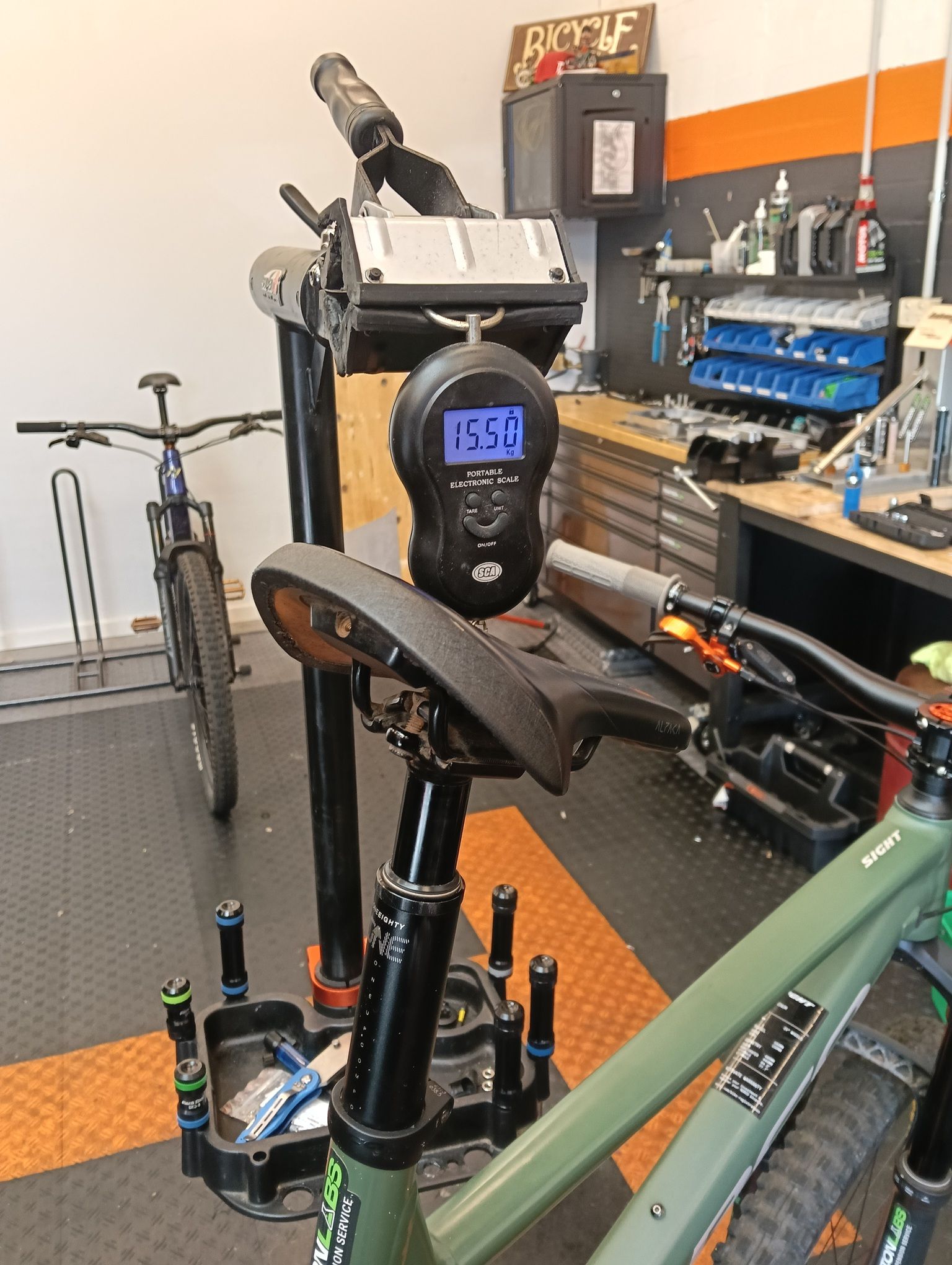
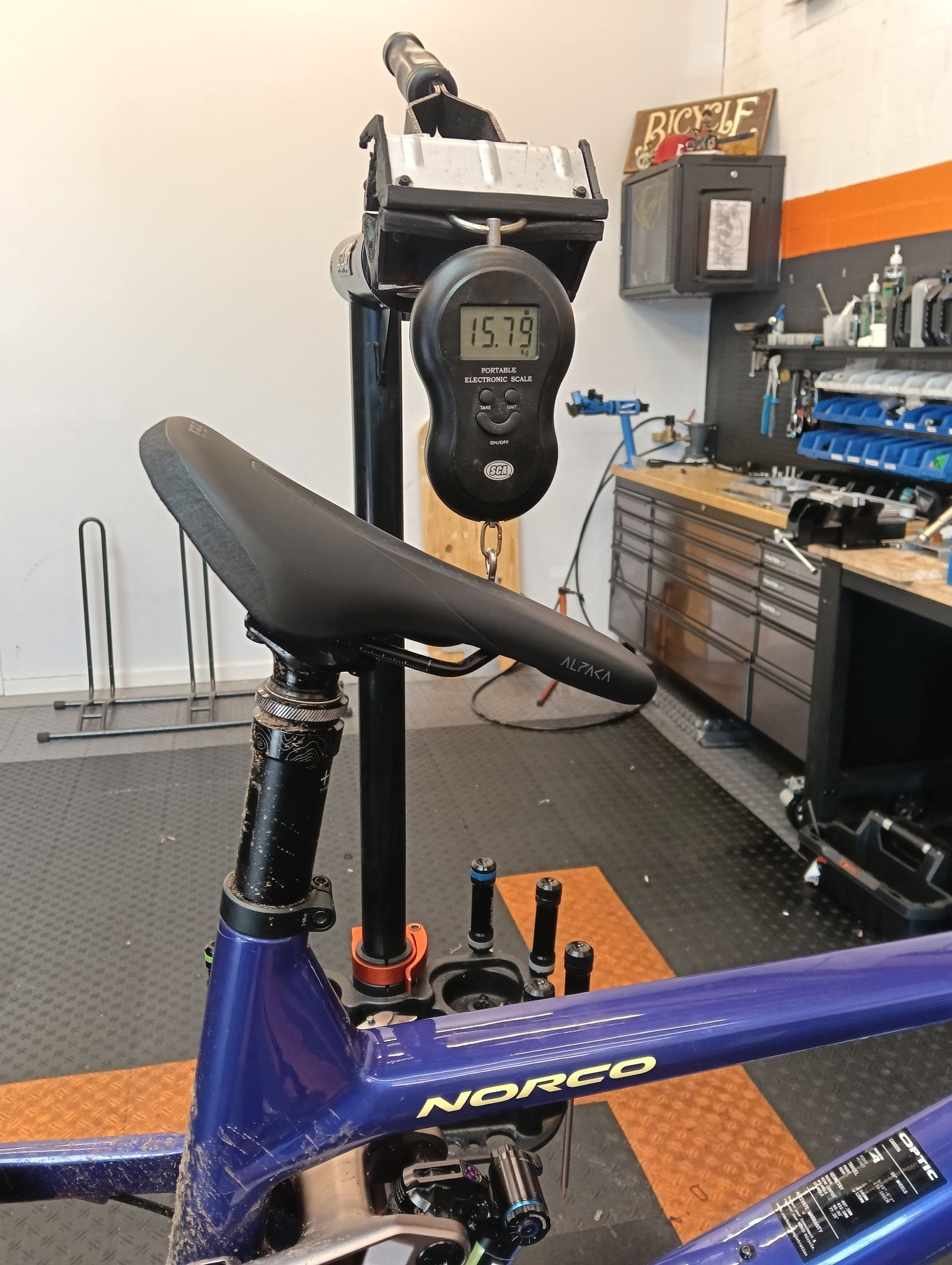
Let’s take my two Norco’s as an example – admittedly not a perfect apples to apples comparison but the point is still easy to make. A Sight A1 and an Optic C2. Both high spec mountain bikes in the same size, the Sight is alloy and the Optic is carbon. Both large.
Sight weighs in at 15.50kg. Optic at 15.79kg. The newer, significantly more expensive carbon model is heavier! So clearly weight is not the be all/end all in the MTB equation.
This raises some obvious questions.
Why do they cost so much more than alloy models?
Carbon manufacturing is resource intensive. Engineering, R&D, tooling, material and labour costs are enormous compared to welding alloy tubes together. A single CNC mold for a carbon frame, for one size, in one model, can cost $10,000 up to $100,000. Each raw frame must have the carbon laid into a mold by hand, in the exact position and direction that an engineering team has designed and tested. Carbon is non recyclable and the process generates a lot of material waste, further adding to the cost of the carbon version.
What’s the point of the additional expense if they’re not noticeably lighter?
If less weight isn’t really the selling point, then why bother?
- Carbon has outstanding ride qualities.
It is a natural vibration damper, taking the buzz out of trails. It can be designed with extraordinary amounts of stiffness vs a metal frame without the addition of too much visual size, the carbon layup simply gets thicker in critical areas rather than having to increase it’s exterior dimensions. Most people who buy a carbon handlebar are able to discern this effect immediately, or at least notice after a long ride that their hands and arms are less tired and beat up.
If the frame is stiffer in key dimensions, it means the wheels and suspension can handle their duties in a more precise manner. The bike feels much more composed when you direct it down a chunky, rough, fast section of trail. It will respond more accurately to your inputs, without you having to make subtle corrections to account for flexing and jarring. You can push as hard as you like into corners (assuming the corner has the support) through your hands and feet without making the frame squirm and twist.
2. More Beautiful Shapes
Besides the placement of the rear suspension pivots (and thus deciding the ‘type of linkage’ a bike has) there aren’t many avenues to express any design flair with metal tubes. Complex metal shapes aren’t impossible, but they are difficult and expensive to produce to the extent that they may as well use carbon instead, and reap the additional benefits of that material.
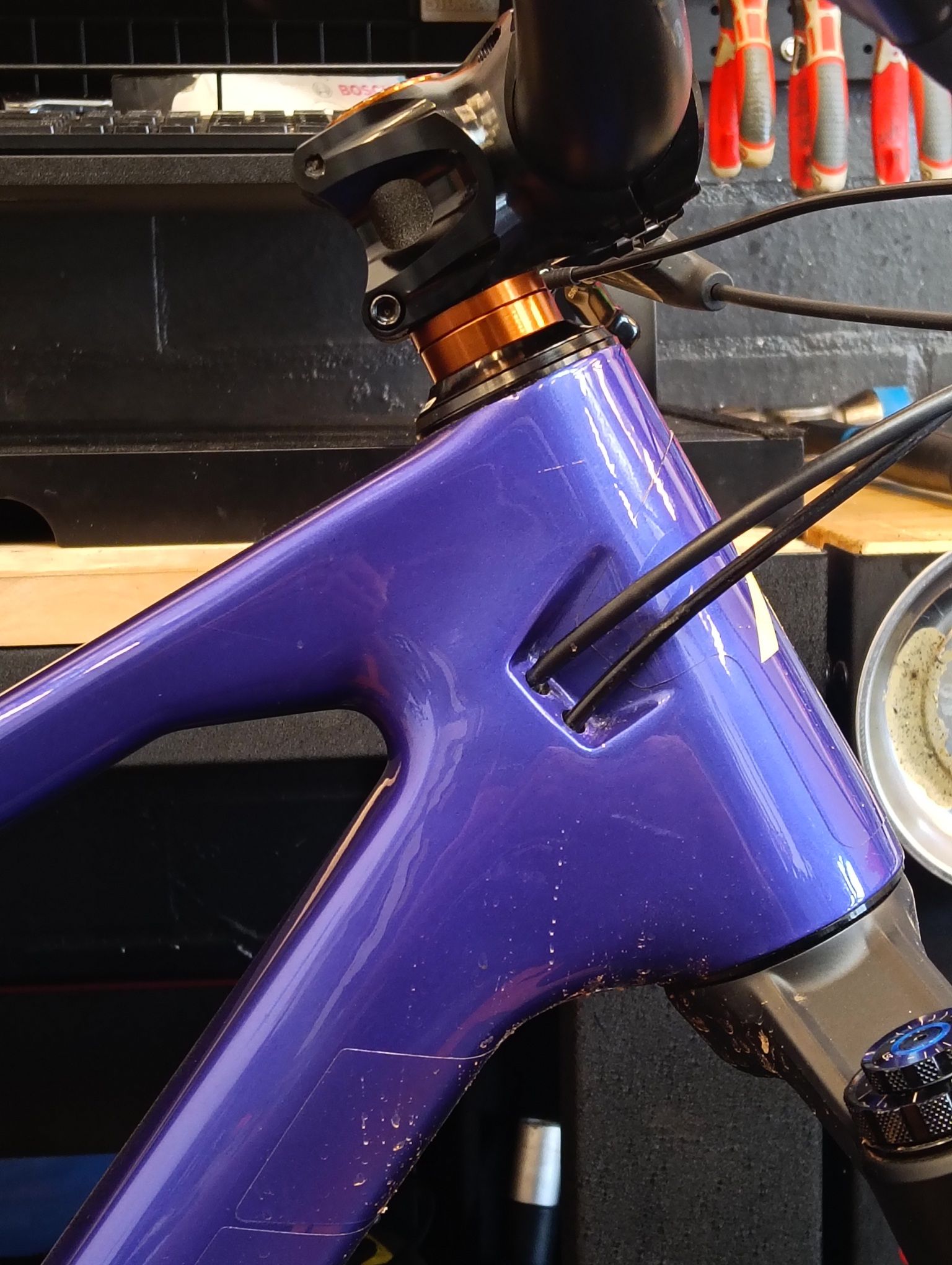
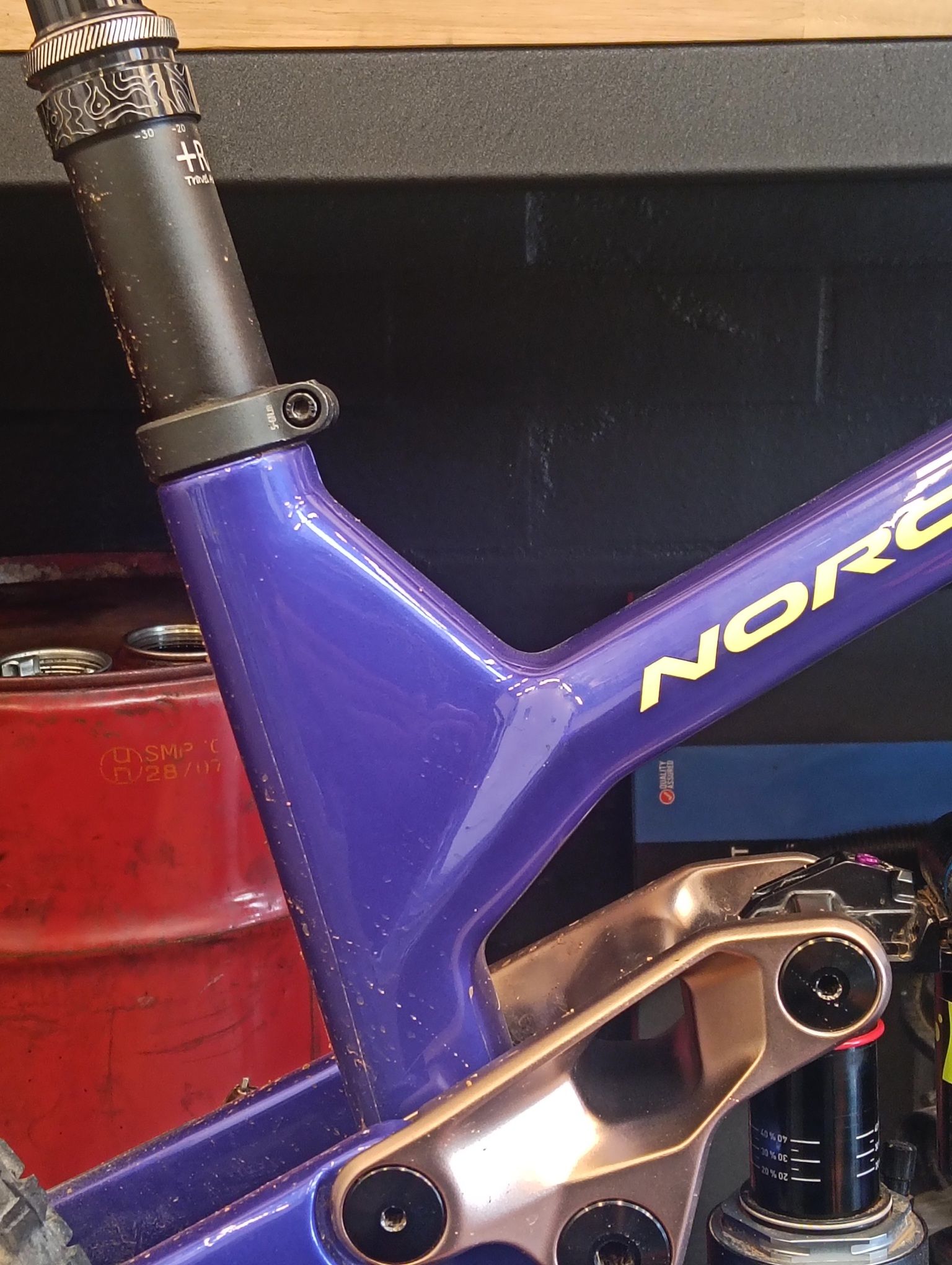
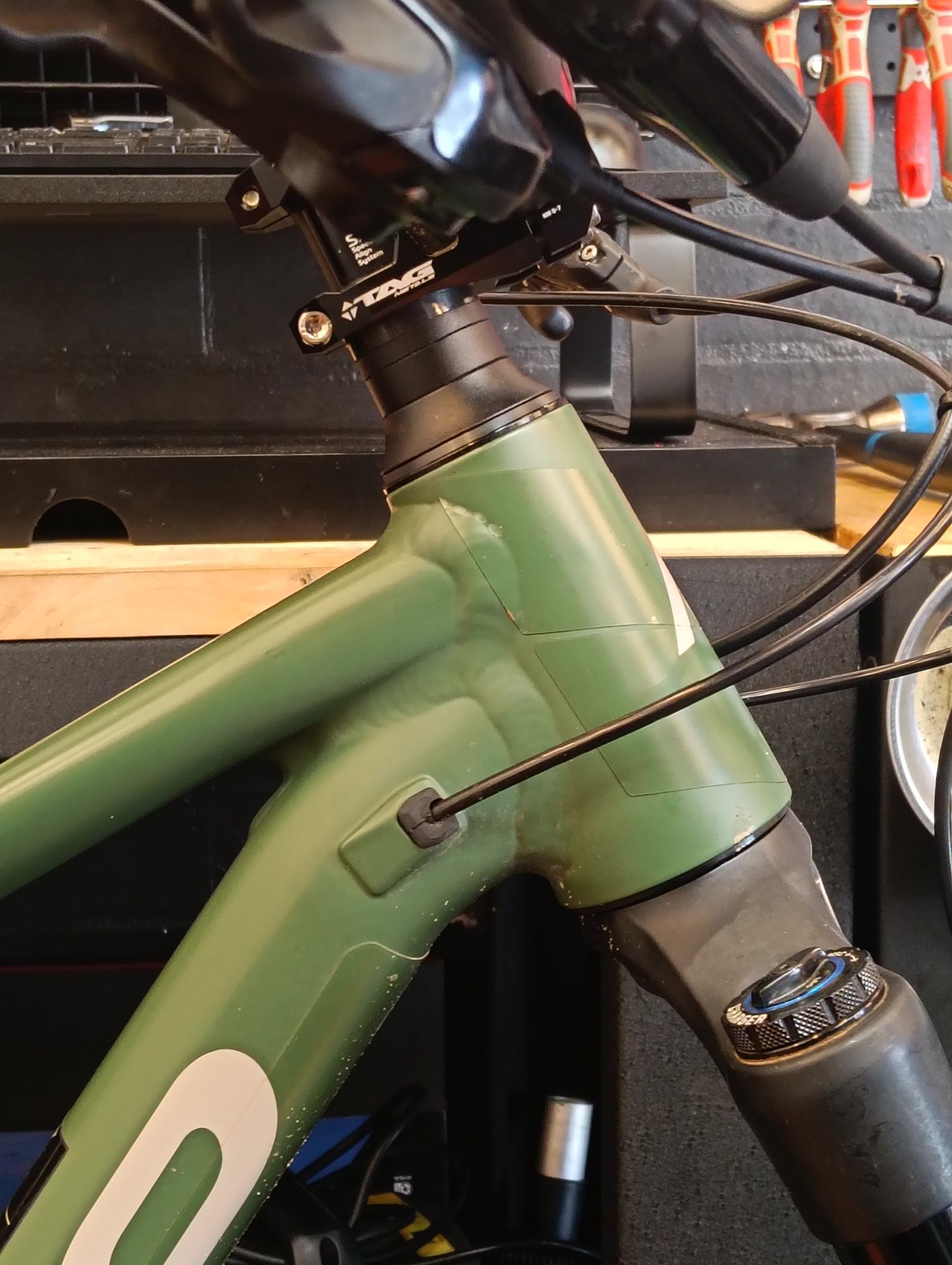
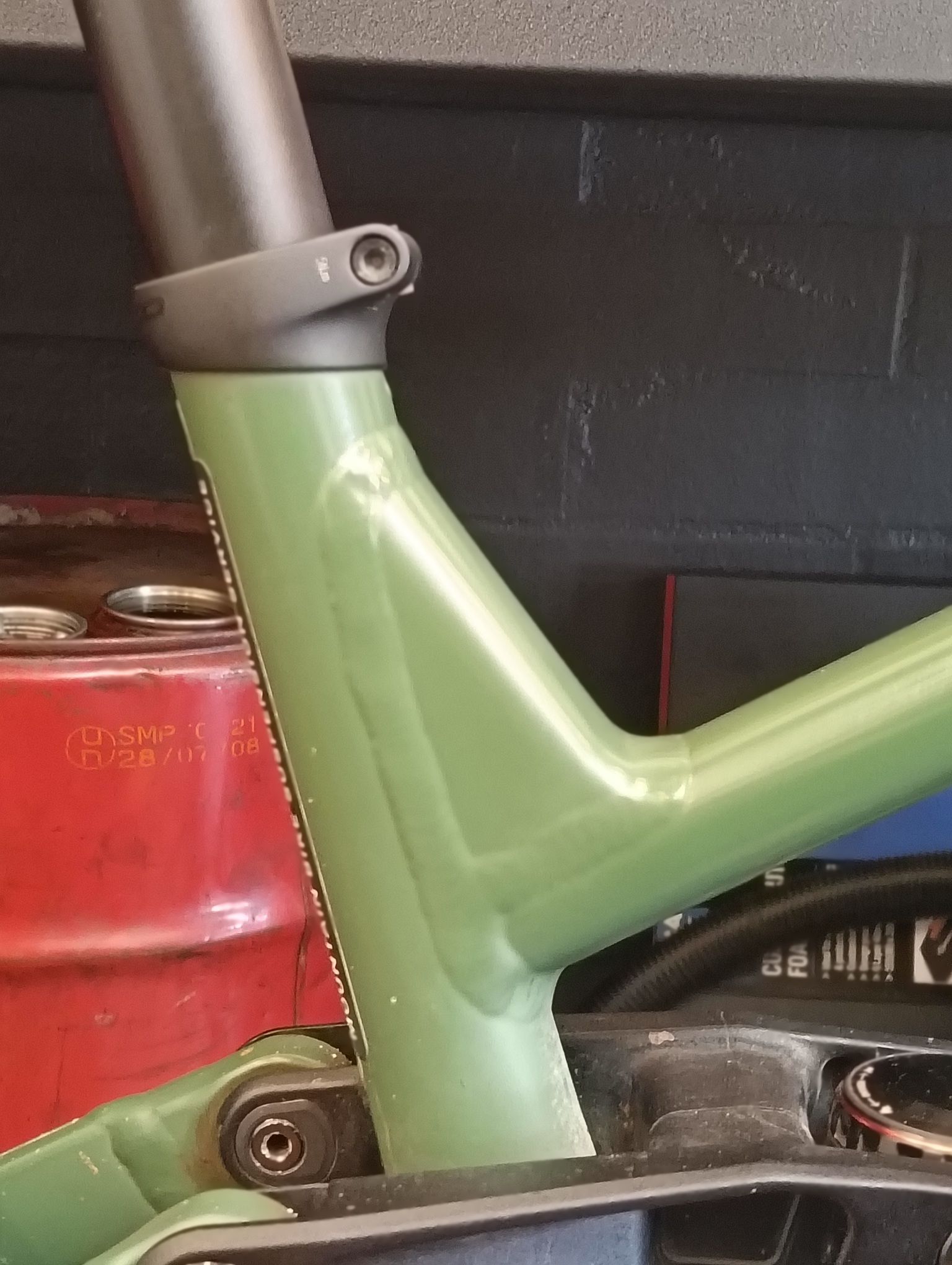
Carbon doesn’t care what shape it’s cross section is (assuming the shape is suitable for it’s intended purpose). Square. Round. Oval. Squircle. A square cross section that morphs into a round one. Fill your boots. Top tubes and down tubes can be melded into each other where they meet the headtube by way of a smooth carbon curve. While I certainly appreciate nice weld when I see one, I definitely prefer the ‘one piece’ look of a carbon front triangle. Smooth, organic shapes blend seamlessly into chunky, aggressive structures.
3. Durability (yes, really)
-Deep breath- I think carbon has finally surpassed metal frames in pound-for-pound durability. I really do. This is my opinion, that I’ll back up with anecdotes, not scientific data.
First things first: We have to accept that cosmetic damage is par for the course. If you ride a bike offroad, you are going to lose some paint. We’re not talking about how tough the paint is (paint actually adheres better to metal frames, making them less prone to chips…..FYI) We are discussing the ability of carbon to carry out it’s duties as a sturdy, reliable and safe MTB frame.
We’ve already covered the fact that carbon frames can be laid up in such a way that strength can be added to any area it’s needed. The most obvious impact zone is the underside of the downtube, prone to rock strikes, impacts from a crash and plain old transport if you use a tailgate pad. The running joke used to be that all bike damage happened during transit, not riding (it became a joke once the pain of the damage caused by someone else’s pedals on your frame subsided…..)
If you are running a SLAMMED stem, and running your brakes and levers at a very steep angle there is a chance that they will make contact with your top tube if the bars spin around far enough. Whilst you’re definitely going to lose some paint, you are more likely to break your controls, than cause serious damage to the carbon top tube. Yes, the pain of the paint damage will hurt. The bike as a whole should be fine.
There are no welds to fail. I’ve broken a few alloy frames, and I’ve seen dozens of broken alloy frames come through the workshop. They all fail at the weakest weld. Cracks in alloy frames usually initiate and propagate out of welded areas.
Carbon components have a much, MUCH longer fatigue life than alloy frames, especially under cyclic loading. It’s widely accepted that the resin matrix that bonds the carbon pieces together degrades long before the carbon itself fails, but we’re still talking about decades here.
4. Carbon Can Be Repaired
Worst case scenario. You have a crash and the bike goes cartwheeling off amongst some big, jagged rocks. One rock in particular manages to cause real, serious damage to some part of the carbon frame. IT. CAN. BE. REPAIRED. Carbon repair guys are surprisingly easy to find. Lot’s of them have a background in engineering, boating/watersports or the automotive world – point being that they find the requirements of a carbon bicycle to be almost trivial.
Yes, there is cost involved. Yes, it may need paint repairs on top of the carbon repairs – but it can be done.
Alloy, on the other hand, if a warranty claim is denied, you have zero chance of anyone having the skills, resources and facilities to do a high quality alloy repair. There may be people who are happy to lie to your face and say they can do it, but it will be a disaster waiting to happen. Alloy welds are sensitive to heat, oxidation and contamination just to name a few.
Go get that carbon bike. They’re awesome. Most brands offer generous warranties. They can be repaired.
